
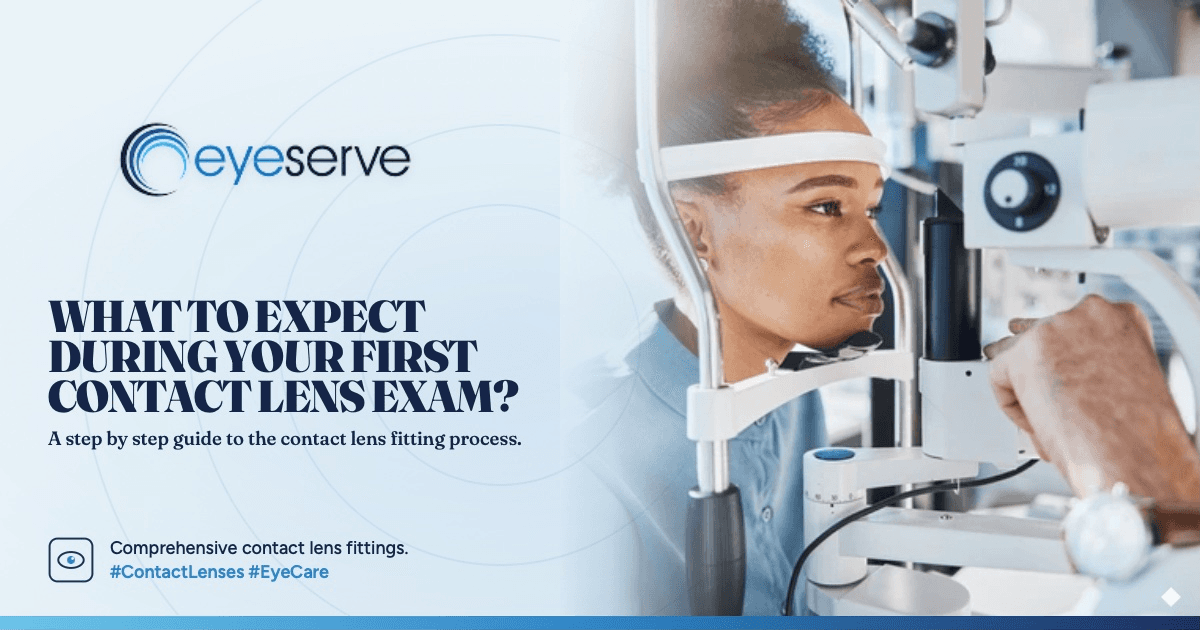
Thinking about trying contact lenses for the first time? If you feel nervous about the process, you are not alone. Many first-time contact lens wearers have questions about what happens during a contact lens exam and fitting. This guide walks you through exactly what to expect when you visit EyeServe in East Point for your first contact lens appointment.
Thinking about trying contact lenses for the first time? If you feel nervous about the process, you are not alone. Many first-time contact lens wearers have questions about what happens during a contact lens exam and fitting. This guide walks you through exactly what to expect when you visit EyeServe in East Point for your first contact lens appointment.
How Long Does a Contact Lens Exam Take?
A typical first-time contact lens exam and fitting takes about 60 to 90 minutes. This is longer than a regular eye exam because Dr. Ngoddy needs to take additional measurements, discuss lens options with you, and allow time for you to practice inserting and removing your lenses. We understand that contact lenses are a new experience for you, and we want to make sure you feel confident and comfortable before you leave our office.
What to Bring to Your Contact Lens Exam
Before your appointment, gather these items to bring with you:
Your insurance card and medical card
Photo ID
Your current glasses (if you wear them)
Any current contact lenses if you are already a wearer
A list of medications you take
Questions you want to ask about contact lenses
Sunglasses (your eyes may be dilated)
Old contact lens prescription
The Step-by-Step Contact Lens Exam Process
Here is exactly what happens during your contact lens exam at EyeServe:
1
Check-In and Medical History
When you arrive, you will complete paperwork about your medical and eye health history. This information helps Dr. Ngoddy understand your overall health and any conditions that might affect your contact lens wear. Be sure to mention allergies, dry eyes, diabetes, or any other health concerns.
2
2 Vision and Eye Health Screening
Dr. Ngoddy or her technician will check your current vision and test your eye health. This is similar to a regular eye exam and includes reading letters on a chart to measure your vision and assessing the overall health of your eyes.
3
Comprehensive Eye Examination
Next, Dr. Ngoddy performs a comprehensive eye exam. She checks your vision prescription, evaluates your eye focusing and teaming, screens for glaucoma and other eye conditions, and examines your retina and optic nerve. This is an important step because it ensures your eyes are healthy enough for contact lens wear.
4
Contact Lens Measurements
This is a key difference from a regular eye exam. Dr. Ngoddy measures the curvature and diameter of your cornea using a specialized tool called a corneal topographer or keratometer. She also evaluates the shape and size of your eye to determine which type and brand of contact lenses will fit you best. These measurements are essential for comfortable contact lens wear.
5
Discussion About Your Lifestyle and Needs
Dr. Ngoddy will ask you questions about your daily routine, how much screen time you have, sports or activities you enjoy, and whether you prefer daily disposable or extended-wear lenses. This information helps her recommend the best lens type for your specific lifestyle. About 90 percent of people who want to wear contact lenses can wear them successfully, including people with astigmatism or dry eyes.
6
Trial Lens Fitting
Dr. Ngoddy will place trial contact lenses on your eyes so you can experience how different types feel. You will look through them to test the vision and comfort. This hands-on step helps determine which brand and lens design works best for you. Do not worry if you feel nervous about having something placed in your eye. Dr. Ngoddy is patient and will take her time with you.
7
Contact Lens Insertion and Removal Training
If you are a first-time contact lens wearer, staff teaches you how to properly insert and remove your lenses. You will practice putting in your trial lenses under their supervision. She teaches you the correct technique so you can do this safely and confidently at home. This step may take extra time because we want to make sure you feel comfortable.
8
Contact Lens Care and Hygiene Instructions
Dr. Ngoddy explains how to clean, store, and care for your contact lenses properly. Proper lens care is essential for preventing eye infections and keeping your lenses comfortable. She will provide you with contact lens solution and explain the daily care routine you need to follow.
9
Contact Lens Prescription and Payment
At the end of your appointment or your follow up appointment– Dr. Ngoddy will write a contact lens prescription you can use with any contact lens retailer, to purchase. Your prescription will include the lens brand, power, and fitting parameters specific to your eyes.
10
Follow-Up Appointment Scheduling
Most contact lens fittings include a follow-up visit within 1 to 2 weeks to make sure your lenses are fitting well and you are comfortable wearing them. This appointment is important because it allows Dr. Ngoddy to check that the fit is still correct and answer any questions that come up during your first few days of wear.
Can You Wear Contact Lenses If You Have Astigmatism?
Yes! You can wear contact lenses even if you have astigmatism. Toric contact lenses are specially designed to correct astigmatism and provide clear vision. The contact lens exam may take slightly longer if you have astigmatism because the lenses require more precise fitting, but about 90 percent of people with astigmatism can wear contacts successfully.
What About Contact Lenses and Dry Eyes?
If you have dry eyes, you can still wear contact lenses. Dr. Ngoddy will work with you to find lens materials and types that minimize dryness. Some specialty lenses retain more moisture, and proper cleaning and care routines can help manage dry eye symptoms while wearing contacts. Let Dr. Ngoddy know if you have dry eyes during your exam so she can recommend the best options for you.
Common Questions About First Contact Lens Exams
Is a Contact Lens Exam Different from a Regular Eye Exam?
Yes. A contact lens exam includes everything from a regular eye exam plus additional measurements of your corneal curvature and diameter, trial lens fitting, and instruction on how to insert and remove lenses safely.
Will I Feel Uncomfortable Having Lenses Put in My Eyes?
Most people feel mild discomfort when a contact lens is first placed on their eye, but it typically goes away in seconds.
Can I Take the Lenses Home Immediately After My Exam?
If we have your intended lens you will go home with a trial pair. Some exams require a follow up prior to finalizing the prescription but we make our best attempts to send every contact lens fit home with trial lenses they can try for comfort and vision testing.
What if the Lenses Do Not Feel Comfortable After I Start Wearing Them?
Contact comfort is important. If your lenses do not feel right during the first week, call us and schedule an adjustment appointment. We can fine-tune the fit or try a different brand or type of lens that feels better for your eyes.
How Much Does a Contact Lens Exam Cost?
A contact lens exam typically costs $75 to $150 in addition to your regular eye exam, depending on the complexity of your fitting. Most vision insurance plans provide some coverage. Ask about insurance benefits before your appointment.
Do I Need a New Prescription Every Year for Contact Lenses?
Yes. Contact lens prescriptions are valid for one year. After that, you need a new exam and prescription to ensure your vision prescription has not changed and your lenses are still fitting properly.
Tips for Your First Contact Lens Exam
Here are some suggestions to make your first contact lens appointment a positive experience:
Arrive a few minutes early so you have time to complete paperwork without rushing
Ask questions about anything you do not understand. Dr. Ngoddy wants you to feel confident
Be honest about your lifestyle, screen time, and any eye conditions. This helps us find the right lenses for you
Plan extra time for the insertion and removal practice. It takes a few tries for most people to get comfortable
Bring sunglasses because your eyes may be dilated and sensitive to light
Allow time to adjust after your exam because your eyes might feel slightly tired from the dilating drops
After Your Contact Lens Exam: What Happens Next
After your contact lens fitting appointment, here is what to expect:
Trial Lens Period
You may wear trial lenses for a few days or a week to see how they feel during your daily activities. Keep notes about how they perform during different activities like work, sports, or computer use.
Follow-Up Appointment
You will return to EyeServe within 1 to 2 weeks for a follow-up visit. During this appointment, Dr. Ngoddy checks that your lenses are fitting well, your vision is clear, and you are comfortable wearing them. She answers any questions and makes adjustments if needed.
Getting Your Final Prescription
Once Dr. Ngoddy confirms that your contact lenses are fitting well and feeling comfortable, she provides you with your final contact lens prescription. You can use this prescription to order contacts from any lens retailer, or you can order through EyeServe.
Do I Have to See the Same Doctor for Follow-Up Visits?
At EyeServe, you always see Dr. Ngoddy. This means you get consistent, personalized care for all your contact lens fitting appointments and follow-ups. She remembers your individual needs and can make fine adjustments based on your feedback.
Schedule Your First Contact Lens Exam Today
Ready to try contact lenses? EyeServe makes it easy to get started. Contact us today to schedule your first contact lens exam and fitting with Dr. Ngoddy in East Point.
Book Your Contact Lens Exam
Call: (404) 460-6163
Location: 844 Cleveland Ave SW, East Point, GA 30344 (inside Walmart Optical)
Hours: Tuesday through Thursday, 10 AM to 5 PM
More Questions About Contact Lenses?
Are Hard Contacts or Soft Contacts Better?
Soft contacts are more comfortable for most first-time wearers. Hard or rigid gas-permeable lenses are used less frequently but may be recommended for certain eye conditions. Dr. Ngoddy will discuss which type is best for your eyes.
Can I Sleep in My Contact Lenses?
Not all contact lenses are approved for overnight wear. Daily disposable lenses must be removed before sleep. Some specialty lenses are designed for extended or overnight wear, but only if approved by your eye doctor. Never sleep in lenses unless Dr. Ngoddy specifically recommends it.
How Do I Know If Contact Lenses Are Right for Me?
The best way to find out is to schedule a contact lens exam with Dr. Ngoddy. About 90 percent of people who want to wear contacts can. During your exam, she will determine if contacts are a good option for your eyes and lifestyle.
How Long Does a Contact Lens Exam Take?
A typical first-time contact lens exam and fitting takes about 60 to 90 minutes. This is longer than a regular eye exam because Dr. Ngoddy needs to take additional measurements, discuss lens options with you, and allow time for you to practice inserting and removing your lenses. We understand that contact lenses are a new experience for you, and we want to make sure you feel confident and comfortable before you leave our office.
What to Bring to Your Contact Lens Exam
Before your appointment, gather these items to bring with you:
Your insurance card and medical card
Photo ID
Your current glasses (if you wear them)
Any current contact lenses if you are already a wearer
A list of medications you take
Questions you want to ask about contact lenses
Sunglasses (your eyes may be dilated)
Old contact lens prescription
The Step-by-Step Contact Lens Exam Process
Here is exactly what happens during your contact lens exam at EyeServe:
1
Check-In and Medical History
When you arrive, you will complete paperwork about your medical and eye health history. This information helps Dr. Ngoddy understand your overall health and any conditions that might affect your contact lens wear. Be sure to mention allergies, dry eyes, diabetes, or any other health concerns.
2
2 Vision and Eye Health Screening
Dr. Ngoddy or her technician will check your current vision and test your eye health. This is similar to a regular eye exam and includes reading letters on a chart to measure your vision and assessing the overall health of your eyes.
3
Comprehensive Eye Examination
Next, Dr. Ngoddy performs a comprehensive eye exam. She checks your vision prescription, evaluates your eye focusing and teaming, screens for glaucoma and other eye conditions, and examines your retina and optic nerve. This is an important step because it ensures your eyes are healthy enough for contact lens wear.
4
Contact Lens Measurements
This is a key difference from a regular eye exam. Dr. Ngoddy measures the curvature and diameter of your cornea using a specialized tool called a corneal topographer or keratometer. She also evaluates the shape and size of your eye to determine which type and brand of contact lenses will fit you best. These measurements are essential for comfortable contact lens wear.
5
Discussion About Your Lifestyle and Needs
Dr. Ngoddy will ask you questions about your daily routine, how much screen time you have, sports or activities you enjoy, and whether you prefer daily disposable or extended-wear lenses. This information helps her recommend the best lens type for your specific lifestyle. About 90 percent of people who want to wear contact lenses can wear them successfully, including people with astigmatism or dry eyes.
6
Trial Lens Fitting
Dr. Ngoddy will place trial contact lenses on your eyes so you can experience how different types feel. You will look through them to test the vision and comfort. This hands-on step helps determine which brand and lens design works best for you. Do not worry if you feel nervous about having something placed in your eye. Dr. Ngoddy is patient and will take her time with you.
7
Contact Lens Insertion and Removal Training
If you are a first-time contact lens wearer, staff teaches you how to properly insert and remove your lenses. You will practice putting in your trial lenses under their supervision. She teaches you the correct technique so you can do this safely and confidently at home. This step may take extra time because we want to make sure you feel comfortable.
8
Contact Lens Care and Hygiene Instructions
Dr. Ngoddy explains how to clean, store, and care for your contact lenses properly. Proper lens care is essential for preventing eye infections and keeping your lenses comfortable. She will provide you with contact lens solution and explain the daily care routine you need to follow.
9
Contact Lens Prescription and Payment
At the end of your appointment or your follow up appointment– Dr. Ngoddy will write a contact lens prescription you can use with any contact lens retailer, to purchase. Your prescription will include the lens brand, power, and fitting parameters specific to your eyes.
10
Follow-Up Appointment Scheduling
Most contact lens fittings include a follow-up visit within 1 to 2 weeks to make sure your lenses are fitting well and you are comfortable wearing them. This appointment is important because it allows Dr. Ngoddy to check that the fit is still correct and answer any questions that come up during your first few days of wear.
Can You Wear Contact Lenses If You Have Astigmatism?
Yes! You can wear contact lenses even if you have astigmatism. Toric contact lenses are specially designed to correct astigmatism and provide clear vision. The contact lens exam may take slightly longer if you have astigmatism because the lenses require more precise fitting, but about 90 percent of people with astigmatism can wear contacts successfully.
What About Contact Lenses and Dry Eyes?
If you have dry eyes, you can still wear contact lenses. Dr. Ngoddy will work with you to find lens materials and types that minimize dryness. Some specialty lenses retain more moisture, and proper cleaning and care routines can help manage dry eye symptoms while wearing contacts. Let Dr. Ngoddy know if you have dry eyes during your exam so she can recommend the best options for you.
Common Questions About First Contact Lens Exams
Is a Contact Lens Exam Different from a Regular Eye Exam?
Yes. A contact lens exam includes everything from a regular eye exam plus additional measurements of your corneal curvature and diameter, trial lens fitting, and instruction on how to insert and remove lenses safely.
Will I Feel Uncomfortable Having Lenses Put in My Eyes?
Most people feel mild discomfort when a contact lens is first placed on their eye, but it typically goes away in seconds.
Can I Take the Lenses Home Immediately After My Exam?
If we have your intended lens you will go home with a trial pair. Some exams require a follow up prior to finalizing the prescription but we make our best attempts to send every contact lens fit home with trial lenses they can try for comfort and vision testing.
What if the Lenses Do Not Feel Comfortable After I Start Wearing Them?
Contact comfort is important. If your lenses do not feel right during the first week, call us and schedule an adjustment appointment. We can fine-tune the fit or try a different brand or type of lens that feels better for your eyes.
How Much Does a Contact Lens Exam Cost?
A contact lens exam typically costs $75 to $150 in addition to your regular eye exam, depending on the complexity of your fitting. Most vision insurance plans provide some coverage. Ask about insurance benefits before your appointment.
Do I Need a New Prescription Every Year for Contact Lenses?
Yes. Contact lens prescriptions are valid for one year. After that, you need a new exam and prescription to ensure your vision prescription has not changed and your lenses are still fitting properly.
Tips for Your First Contact Lens Exam
Here are some suggestions to make your first contact lens appointment a positive experience:
Arrive a few minutes early so you have time to complete paperwork without rushing
Ask questions about anything you do not understand. Dr. Ngoddy wants you to feel confident
Be honest about your lifestyle, screen time, and any eye conditions. This helps us find the right lenses for you
Plan extra time for the insertion and removal practice. It takes a few tries for most people to get comfortable
Bring sunglasses because your eyes may be dilated and sensitive to light
Allow time to adjust after your exam because your eyes might feel slightly tired from the dilating drops
After Your Contact Lens Exam: What Happens Next
After your contact lens fitting appointment, here is what to expect:
Trial Lens Period
You may wear trial lenses for a few days or a week to see how they feel during your daily activities. Keep notes about how they perform during different activities like work, sports, or computer use.
Follow-Up Appointment
You will return to EyeServe within 1 to 2 weeks for a follow-up visit. During this appointment, Dr. Ngoddy checks that your lenses are fitting well, your vision is clear, and you are comfortable wearing them. She answers any questions and makes adjustments if needed.
Getting Your Final Prescription
Once Dr. Ngoddy confirms that your contact lenses are fitting well and feeling comfortable, she provides you with your final contact lens prescription. You can use this prescription to order contacts from any lens retailer, or you can order through EyeServe.
Do I Have to See the Same Doctor for Follow-Up Visits?
At EyeServe, you always see Dr. Ngoddy. This means you get consistent, personalized care for all your contact lens fitting appointments and follow-ups. She remembers your individual needs and can make fine adjustments based on your feedback.
Schedule Your First Contact Lens Exam Today
Ready to try contact lenses? EyeServe makes it easy to get started. Contact us today to schedule your first contact lens exam and fitting with Dr. Ngoddy in East Point.
Book Your Contact Lens Exam
Call: (404) 460-6163
Location: 844 Cleveland Ave SW, East Point, GA 30344 (inside Walmart Optical)
Hours: Tuesday through Thursday, 10 AM to 5 PM
More Questions About Contact Lenses?
Are Hard Contacts or Soft Contacts Better?
Soft contacts are more comfortable for most first-time wearers. Hard or rigid gas-permeable lenses are used less frequently but may be recommended for certain eye conditions. Dr. Ngoddy will discuss which type is best for your eyes.
Can I Sleep in My Contact Lenses?
Not all contact lenses are approved for overnight wear. Daily disposable lenses must be removed before sleep. Some specialty lenses are designed for extended or overnight wear, but only if approved by your eye doctor. Never sleep in lenses unless Dr. Ngoddy specifically recommends it.
How Do I Know If Contact Lenses Are Right for Me?
The best way to find out is to schedule a contact lens exam with Dr. Ngoddy. About 90 percent of people who want to wear contacts can. During your exam, she will determine if contacts are a good option for your eyes and lifestyle.